
 English
 Français
 Español
Bathroom Sliding Glass Shower Doors Basics: Design, Advantages, and Optimization
The selection of Bathroom Sliding Glass Shower Doors represents a critical design decision in modern bathroom renovation, moving beyond mere functionality to significantly influence the aesthetic and efficiency of the space. Unlike traditional hinged doors, the sliding mechanism addresses the fundamental challenge of limited space, particularly in smaller urban or en-suite bathrooms, by eliminating the need for swing clearance. This space-saving attribute is the core advantage driving their widespread adoption. Beyond practicality, the use of large, seamless glass panels contributes to a more open, brighter, and visually expansive bathroom environment, enhancing the perception of luxury and cleanliness. Modern sliding systems have evolved significantly, now featuring smoother, quieter hardware and minimized framing, addressing past concerns about cumbersome tracks and difficult cleaning. When properly installed, these doors offer superior water containment compared to shower curtains or older framed enclosures. The inherent durability of tempered safety glass and robust stainless steel or aluminum hardware ensures a long lifespan, provided that the initial selection prioritizes quality components over budget alternatives. Therefore, the choice of a sliding glass door system is a highly strategic investment that balances ergonomic efficiency, modern design aesthetics, and long-term maintenance costs for the homeowner.
The primary benefits of incorporating a modern sliding glass door system include:
- Exceptional Space Efficiency: Eliminates the need for external clearance, optimizing floor space in compact bathrooms.
- Superior Light Transmission: Maximizes natural light flow, making the entire bathroom feel larger and more open.
- Ease of Access: Provides a wide, unobstructed opening, which is beneficial for accessibility and everyday use.
- Aesthetic Versatility: Available in numerous configurations, from minimalist frameless designs to sophisticated bypass systems.
Design Focus: The Allure of Frameless Bathroom Sliding Glass Shower Doors
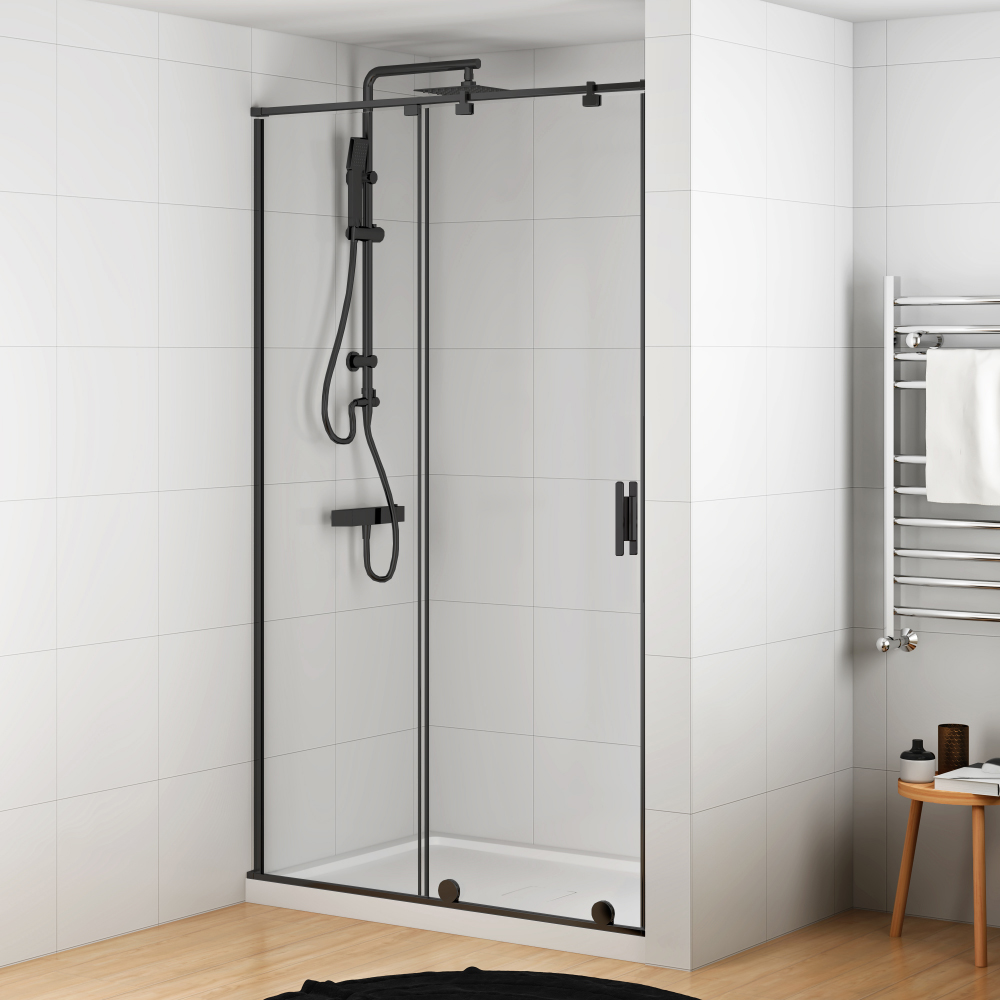
The appeal of Frameless Bathroom Sliding Glass Shower Doors lies in their commitment to minimalist design, serving as a clean, elegant focal point in high-end bathroom remodels. By minimizing the visible metalwork, the frameless system prioritizes the uninterrupted flow of glass, creating a visually lighter structure that nearly vanishes into the bathroom architecture. This design dramatically enhances the aesthetic by maximizing transparency, thereby showcasing tilework and fixtures within the shower area. The absence of heavy frames also significantly reduces potential areas for soap scum and mildew to accumulate, making routine cleaning far simpler than with traditional framed units. Typically utilizing thicker tempered glass (ranging from $38\text{ inch}$ to $12\text{ inch}$), frameless doors rely on precision-engineered stainless steel components—such as exposed rollers and sophisticated track systems—for structural support. When considering Frameless Bathroom Sliding Glass Shower Doors, buyers must ensure the supporting walls are structurally sound to bear the weight of the heavy glass panels. This design requires meticulous installation to ensure perfect alignment and smooth operation, justifying the slightly higher initial investment due to the specialized hardware and labor required.
Key characteristics defining frameless designs:
- Minimal Hardware: Relies on clamps, clips, and robust rollers rather than full perimeter metal framing.
- Heavy Glass Requirement: Uses thicker glass for structural rigidity, typically $10\text{mm}$ or $12\text{mm}$ safety glass.
- Superior Aesthetics: Achieves a high-end, contemporary look with maximized visual space.
| Design Feature | Frameless Sliding Doors | Standard Framed Sliding Doors |
| Glass Thickness | $10\text{mm}$ or $12\text{mm}$ (Thick) | $4\text{mm}$ to $6\text{mm}$ (Thin) |
| Visual Clutter | Very Low (Minimal sightlines) | High (Full perimeter aluminum/vinyl frame) |
| Cost Factor | Higher (Due to specialized hardware and glass) | Lower (Mass-produced components) |
| Cleaning Difficulty | Low (Easy wipe down) | Medium (Tracks and frames trap debris) |
Spatial Solutions: Best Bathroom Sliding Glass Shower Doors for Small Spaces
Selecting the Best Bathroom Sliding Glass Shower Doors for small spaces is a matter of maximizing the usable footprint while maintaining accessibility. In compact bathrooms, every inch counts, and the elimination of a door swing is inherently beneficial. However, within the sliding category, specific configurations perform better than others. Dual bypass doors, where both panels slide, offer the widest potential opening but still require two panels of glass to overlap when open. For genuinely tight areas, a single sliding panel with a fixed glass panel (the most common modern configuration) provides an adequate opening without the complexity of a dual track. The most effective solution often involves pocket sliding doors, which conceal the glass panel entirely within the adjacent wall cavity, though this requires extensive renovation work. When constrained by space, designers often recommend clear glass and minimal hardware, which trick the eye into perceiving more depth, thereby mitigating the visual impact of the enclosure.
Optimal configurations for minimizing footprint:
- Single Sliding Door + Fixed Panel: Offers a wide opening and requires only one track width.
- Corner Neo-Angle Sliders: Utilizes a corner space with angled sides to conserve central floor area.
- Minimalist Hardware: Choosing slim, top-mount roller systems over bulky bottom tracks to reduce visual mass.
Installation and Maintenance: Ensuring Longevity and Performance
Practical Skills: DIY installation of Bathroom Sliding Glass Shower Doors
Undertaking the DIY installation of Bathroom Sliding Glass Shower Doors is an achievable project for experienced homeowners, provided meticulous attention is paid to precision and safety—it is not a task for novices. The process requires accurate measurements and perfect leveling, as any misalignment in the base track or top rail will lead to operational issues, binding, or worse, compromised safety. The heaviest and most critical step is the lifting and positioning of the thick tempered glass panels, which demands at least two individuals and the use of suction cups designed for glass handling. Drilling into bathroom tiles, particularly porcelain or stone, necessitates specialized diamond-tipped bits and a constant water feed to prevent cracking or overheating the drill bit. Prior to starting, the structural integrity of the walls must be confirmed, especially for Frameless Bathroom Sliding Glass Shower Doors, which place more stress on mounting points. Safety should always be prioritized over speed, and manufacturers' detailed instructions must be strictly adhered to.
Critical steps for successful DIY installation:
- Pre-Installation Inspection: Verify all walls are plumb and the threshold is level to prevent operational issues.
- Drilling Precision: Utilize specialized diamond bits for tile drilling, ensuring hole placement is accurate on the first attempt.
- Roller Adjustment: Calibrate the top and bottom rollers meticulously to ensure smooth, silent sliding motion.
Hardware Longevity: Bathroom Sliding Glass Shower Doors hardware replacement guide
The long-term performance and smooth operation of an enclosure depend almost entirely on the quality and maintenance of its components. Following a Bathroom Sliding Glass Shower Doors hardware replacement guide can significantly extend the life of the unit and save money on professional repairs. The most common wear items requiring attention are the rollers (or bearings), the door seals (sweeps), and the bottom track. Rollers can degrade over time due to wear, exposure to mineral deposits, and soap residue, leading to rough or sticky operation. Replacement typically involves identifying the specific wheel diameter and bearing type, unfastening the roller assembly from the glass panel, and securing the new component. Similarly, compromised door seals allow water to escape the enclosure and should be replaced immediately upon showing signs of cracking or hardening. A quality Bathroom Sliding Glass Shower Doors hardware replacement guide will emphasize the importance of using stainless steel or brass replacements over cheaper plastic or zinc components for maximum corrosion resistance and durability.
Commonly replaced components and their issues:
- Rollers/Bearings: Prone to seizing or wearing flat; causes rough, jerky door movement.
- Bottom Guide/Track: Accumulates soap scum and mineral deposits, hindering slide; requires regular deep cleaning or replacement.
- Vinyl Seals (Sweeps/Wipers): Harden, crack, or yellow over time, leading to water leakage outside the enclosure.
Commercial Factors: Bathroom Sliding Glass Shower Doors Price and Cost Factors
Budget Planning: Bathroom Sliding Glass Shower Doors price and cost factors
Establishing an accurate budget requires a granular understanding of the Bathroom Sliding Glass Shower Doors price and cost factors that dictate the final expenditure. The price is not solely determined by the overall size but by a combination of key material and design choices. Glass thickness is a major variable; a door utilizing $12\text{mm}$ glass for a Frameless Bathroom Sliding Glass Shower Doors system will inherently cost significantly more than one using standard $6\text{mm}$ glass due to higher raw material and fabrication expenses. Hardware quality is equally critical, with solid stainless steel components being the industry standard for durability but carrying a higher price tag than chrome-plated brass or aluminum. Furthermore, specific coatings, such as permanent protective treatments (e.g., anti-spot/easy-clean), add to the initial cost but offer tangible long-term value by reducing cleaning time and chemical use. Finally, the complexity of the installation—whether it is a standard rectangular unit or a custom-cut neo-angle enclosure—will significantly influence labor costs, which should always be factored into the overall budget.
Key variables influencing the total project cost:
- Glass Specification: Thickness ($6\text{mm}$ vs. $12\text{mm}$) and type (tempered vs. laminated).
- Hardware Material: Stainless steel vs. aluminum or brass; exposed vs. concealed tracks.
- Specialty Finishes: Anti-spot coatings, etching, or custom glass tints.
- Installation Type: DIY vs. Professional, and complexity of the enclosure shape.
| Cost Driver | Impact on Price | Value Justification |
| Frameless Design | High | Superior aesthetics, easier cleaning, higher resale value. |
| Stainless Steel Rollers | Medium to High | Excellent corrosion resistance, silent and smooth operation. |
| Anti-Spot Glass Coating | Medium | Reduced mineral buildup, minimal maintenance effort. |
| Custom Size/Cut | Highest | Perfect fit for non-standard openings, eliminates gaps. |
FAQ
Are Frameless Bathroom Sliding Glass Shower Doors more difficult to clean than framed models?
No, Frameless Bathroom Sliding Glass Shower Doors are generally much easier to clean than framed models. While the large expanse of glass still requires routine squeegeeing, the absence of an outer frame and bulky bottom tracks eliminates the primary areas where soap scum, mildew, and mineral deposits accumulate. Framed systems have numerous crevices and overlaps that trap moisture and dirt, demanding detailed scrubbing. With a frameless system, the cleaning task is primarily focused on the smooth glass surface itself. Many manufacturers apply specialized anti-spot coatings to these frameless doors, further reducing water spotting and mineral adherence, making a quick daily wipe sufficient for maintenance.
What specific tools are necessary for a safe DIY installation of Bathroom Sliding Glass Shower Doors?
A safe DIY installation of Bathroom Sliding Glass Shower Doors requires specialized tools beyond basic household equipment. Essential tools include a high-quality spirit level or laser level to ensure perfect vertical and horizontal alignment; specialized diamond-tipped or carbide drill bits for penetrating ceramic or porcelain tile without cracking; and professional-grade glass suction cups for securely handling and lifting the heavy, large glass panels. Additionally, a precise measuring tape, shims, non-corrosive silicone sealant (mildew-resistant), and a torque wrench for setting hardware tension are non-negotiable for a professional, watertight, and safe final installation.
How does the thickness of the glass influence the Bathroom Sliding Glass Shower Doors price and cost factors?
The thickness of the glass is one of the most significant Bathroom Sliding Glass Shower Doors price and cost factors. A jump from a standard $6\text{mm}$ thickness to a premium $12\text{mm}$ thickness can increase the base material cost by 50% or more. This price increase is due to the higher raw material volume, the more complex and slower fabrication process (cutting, tempering, drilling), and the increased cost of the specialized, heavier hardware required to safely support the thicker, heavier panel. While more expensive, the thicker glass is critical for achieving the self-supporting structural integrity required by Frameless Bathroom Sliding Glass Shower Doors and provides a much more luxurious, stable, and durable feel.

 Click to view
